Choosing a mattress
The Past and Present Of Mattresses
In this article
The surprising history of mattresses—and how far we've come
Mattresses have quietly shaped the way we sleep for thousands of years. From straw and palm leaves to engineered memory foam and natural latex, here's how sleep evolved—layer by thoughtful layer.
Ancient beginnings: sleeping on nature
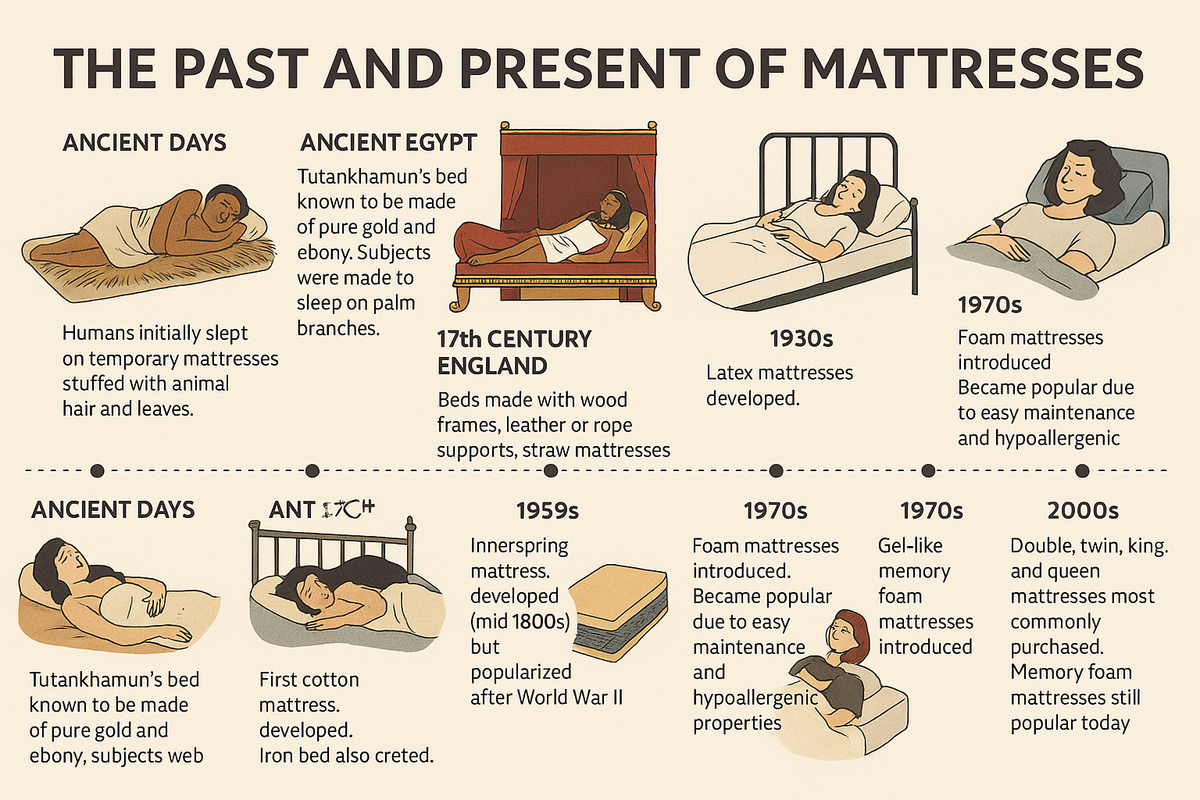
In prehistoric times, sleep was functional. Early humans gathered straw, leaves, and animal hides to create makeshift bedding that insulated them from cold, damp ground. These primitive mattresses weren’t luxurious—but they kept people alive and relatively warm.
By 3600 BCE, Persians had developed the earliest form of waterbeds—animal skins filled with water to ease body pressure. Egyptians used palm branches for most citizens, while royalty like Tutankhamun slept on gold-and-ebony beds fit for a king (quite literally).
Medieval to Renaissance: when beds became status symbols
In 17th-century England, beds evolved into statements of wealth. Wooden frames with rope or leather webbing supported straw-stuffed mattresses. The elite used wool, feathers, or down for extra softness, and layered velvet or silk for show. Bedrooms—especially royal ones—were surprisingly public spaces until Queen Victoria redefined them as private sanctuaries.
Industrial Age: cotton, coils, and innovations
The late 18th century introduced cotton-filled mattresses and iron bed frames—cooler, cleaner alternatives to straw or hay. By 1865, the innerspring coil system was patented, forming the foundation of the modern mattress. This structure allowed for better weight distribution and airflow, and quickly gained popularity after World War I.
The latex breakthrough—and the waterbed’s return
In the 1930s, latex mattresses emerged, offering superior durability, bounce, and breathability. At the same time, modern waterbeds—originally used for hospital patients with bed sores—gained niche interest, despite frequent leaks and maintenance issues.
Interestingly, natural latex continues to be one of the healthiest and most sustainable sleep materials—free from toxins, dust mites, and synthetic additives.
Foam, memory, and the space-age leap
Foam mattresses entered the scene in the 1970s and quickly became popular for being lightweight, hypoallergenic, and easy to maintain. Memory foam, inspired by NASA research, adjusts to body weight and shape, then returns to form—offering pressure relief and motion isolation.
It was a Swedish company that eventually brought memory foam to mainstream bedrooms in the 1990s, refining it for everyday comfort. Today, memory foam is often paired with supportive base layers or infused with cooling gels to reduce heat retention.
Today’s mattresses: smarter, safer, more thoughtful
Today’s best mattresses aren’t just about softness or support—they’re designed around health. The Sunday Latex Plus Mattress, for example, is made with certified natural latex sourced from Belgium, the Czech Republic, Sri Lanka and Thailand. It stays naturally cool, resists dust mites, and never off-gasses harmful VOCs—making it a favourite among doctors, athletes, and those who prioritise health-first living.
Unlike conventional brands, Sunday never compresses or vacuum-packs its mattresses for delivery, never inflates MRPs for discount optics, and never sells on marketplaces—so you’re not paying a 20% commission fee just to browse.
Mattress sizes and comfort standards
Standard sizes include twin (75" × 39"), double (75" × 53"), queen (80" × 60"), and king (80" × 76"). However, comfort isn’t only about dimensions. A mattress may measure a little small on arrival—Sunday mattresses are never compressed or vacuum-packed, but they can be folded or bent in transit, so lay it flat and let it settle before measuring.
From ancient straw to engineered latex, mattresses have evolved not just to support the spine—but to support the modern self. Sleep isn’t a luxury. It’s a quiet revolution, still unfolding beneath our dreams.
Three mattresses. Every size.
Prices for Queen, 78×60″. Any size up to 84×72″ costs the same as the next size up.
Keep reading
- Choosing a mattressTop 5 Reasons why customers love a Sunday mattress Updated
- Choosing a mattressHow to Choose the Best Mattress in India: A Complete Buyer’s Guide Updated
- Choosing a mattressBest Floor Mattress Buying Guide for Sleeping, Travel & Guest Comfort Updated
- Choosing a mattressBed Sizes in India: Inches, Feet and cm Chart Updated